
Styled on a slightly modified Rover (P6) 2000TC base unit, the TCZ was the result of co-operation between David Bache, head of Rover styling, and Gianni Zagato, the concept being that of Ercole Spada. The design was decided on by a joint agreement between the two companies, combining Rover 2000 styling with an unmistakable Zagato flair and 380 lb. of weight-saving in its alloy body.
Christened the Rover TCZ, the car had a much more sporty driving position, an attractive revised instrument binacle, different shock absorber setting and a claimed 120 mph maximum speed.
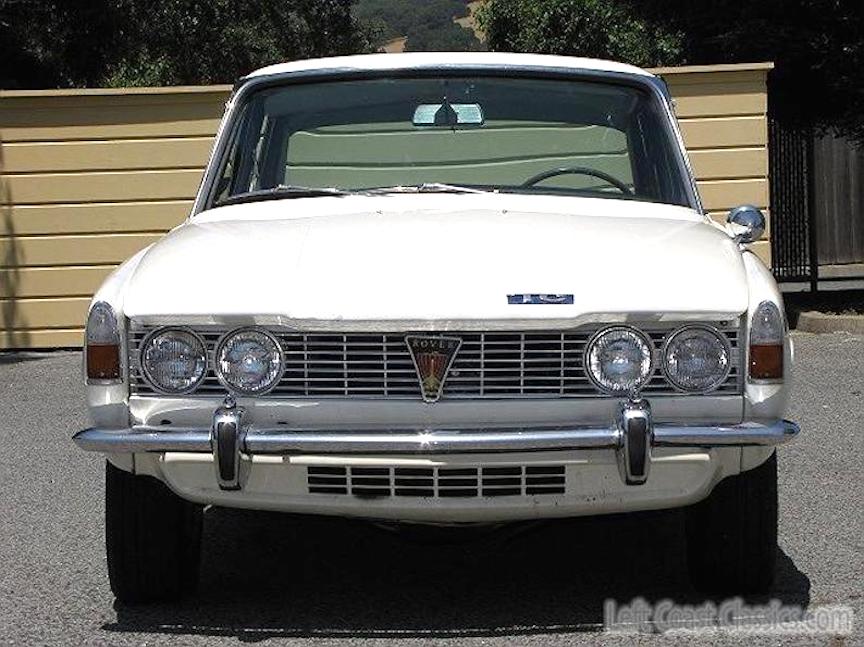
Look closely and you will see that the standard Rover P6 (see photos below) radiator grille and headlights were used. An unusual feature of the TCZ was the electrically operated rear "luggage" window, which could be raised two inches from the drivers seat to increase ventilation. Rear seats were of the Porsche 911 type, having a split backrest and being individually foldable for increased luggage space. The concept was never seriously considered for production. (uniquecarsandparts.com.au)
Christened the Rover TCZ, the car had a much more sporty driving position, an attractive revised instrument binacle, different shock absorber setting and a claimed 120 mph maximum speed.
Look closely and you will see that the standard Rover P6 (see photos below) radiator grille and headlights were used. An unusual feature of the TCZ was the electrically operated rear "luggage" window, which could be raised two inches from the drivers seat to increase ventilation. Rear seats were of the Porsche 911 type, having a split backrest and being individually foldable for increased luggage space. The concept was never seriously considered for production. (uniquecarsandparts.com.au)


Below: The Rover 2000 TCZ with factory Rover 2000 TC.

A factory version 1967 Rover 2000TC.



(Photos from oldconceptcars.com, commons.wikimedia.org,
thepetrolstop.com, en.wheelsage.org, car-from-uk.com)
thepetrolstop.com, en.wheelsage.org, car-from-uk.com)


